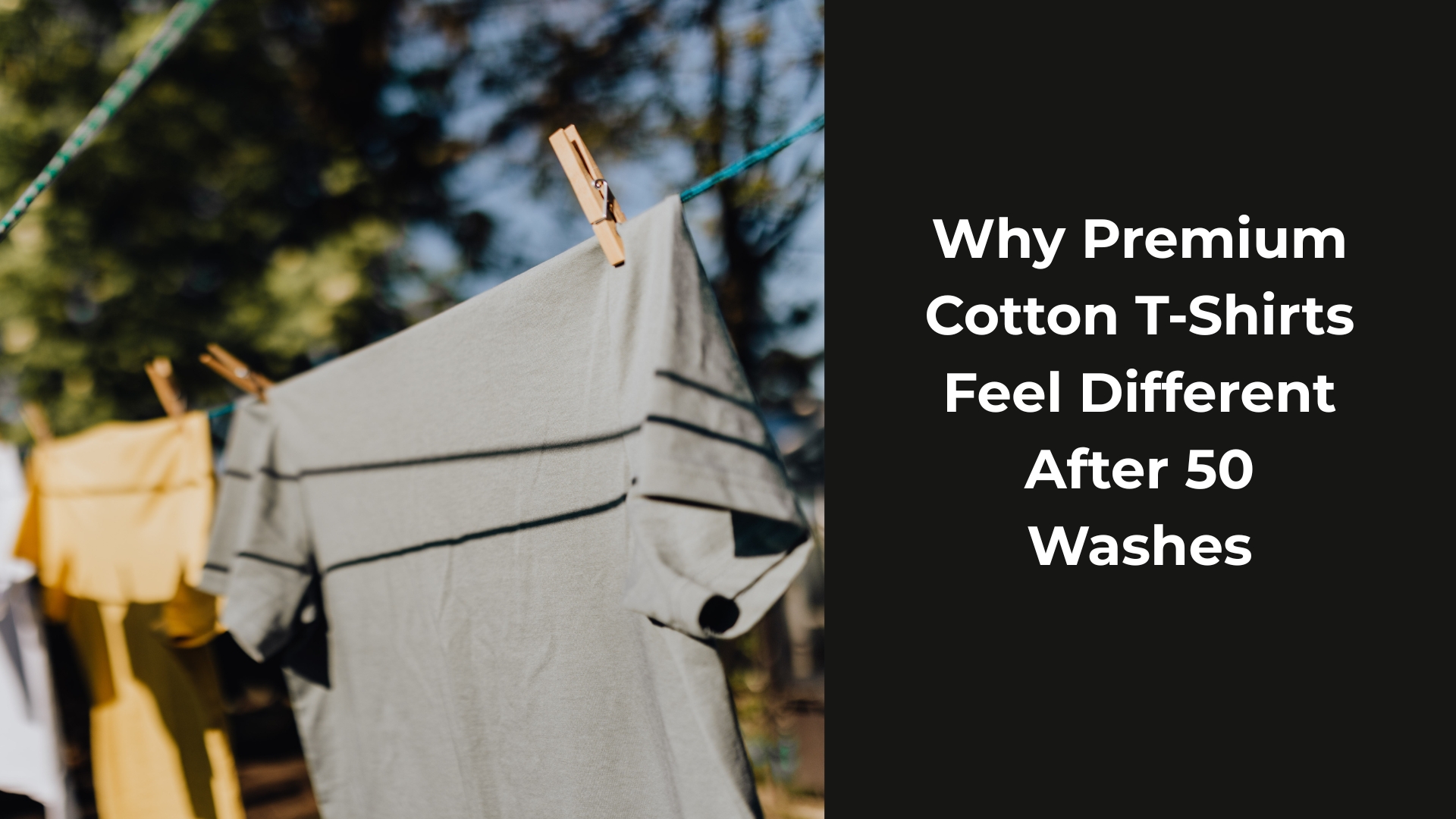
Why Premium Cotton T-Shirts Feel Different After 50 Washes

The first wash can make almost any T-shirt look good. The real test begins months later.

After 20, 30, or even 50 washes, you start noticing the difference: one T-shirt becomes thin, twisted and dull, while another still feels comfortable, holds its shape and looks surprisingly fresh. That difference isn’t simply about the logo on the chest. It comes down to fiber quality, fabric construction, finishing, dyeing, stitching and manufacturing consistency.

For Boer & Fitch mens wear, this is exactly why we believe clothing should be considered beyond its first impression. From sourcing fabrics to developing garments from scratch, our focus is on creating premium quality at an affordable price—clothing designed to be worn repeatedly, not replaced quickly.

What Actually Happens to a T-Shirt After 50 Washes?

Every wash exposes fabric to water, detergent, movement, temperature and drying. Over time, these factors can affect:

  • Fabric strength
  • Surface softness
  • Shape retention
  • Colour intensity
  • Shrinkage
  • Seam appearance
  • Print durability

The American Association of Textile Chemists and Colorists (AATCC) maintains dedicated test methods for evaluating textile performance, including colorfastness to laundering, dimensional changes and appearance after home laundering. AATCC textile testing standards

So when a T-shirt still feels good after dozens of washes, it isn’t necessarily luck. Its performance is influenced by decisions made long before it reaches your wardrobe.

Premium Cotton Isn’t Just About Saying “100% Cotton”

One common misconception is that two T-shirts labelled 100% cotton should perform exactly the same.

They don’t.

Cotton quality can vary according to factors such as fibre characteristics, yarn construction, fabric weight, knitting and finishing. The final garment is the result of several manufacturing decisions—not simply the word “cotton” on a label.

The U.S. Federal Trade Commission explains that textile labels must accurately disclose fibre content, and claims such as “100% Cotton” should reflect the actual fibre composition. FTC guidance on cotton and textile labeling

This is why premium quality starts much earlier than the finished T-shirt.

The Difference Begins With Sourcing

At Boer & Fitch, sourcing isn’t simply about finding the lowest-cost fabric.

The fabric has to make sense for the garment we are trying to create.

A good cotton T-shirt should balance:

Softness + strength + comfort + construction + appearance

A fabric that feels extremely soft on day one but loses its structure quickly isn’t necessarily better. Likewise, an extremely heavy fabric isn’t automatically premium.

The goal is to find the right combination for everyday wear.

That philosophy is particularly important for our value cotton tees, where the objective is to make quality everyday clothing accessible without unnecessarily inflating the price.

Why Manufacturing “From Scratch” Matters

There is a major difference between simply purchasing finished garments and having greater control over the manufacturing process.

With own manufacturing, decisions can be made throughout the product journey—from fabric selection and cutting to stitching, finishing and quality checking.

That control creates opportunities to identify problems before a garment reaches the customer.

For example, a T-shirt’s long-term performance can be influenced by details that aren’t immediately obvious:

1. Fabric Construction

The way yarns are knitted into fabric affects how the garment behaves during repeated use and laundering.

2. Stitching Quality

Weak or inconsistent seams can cause garments to lose their shape even when the fabric itself remains strong.

3. Finishing

Finishing processes influence the garment’s hand feel, appearance and dimensional stability.

4. Printing

For printed T-shirts, the print has to complement the fabric rather than becoming the first thing to deteriorate.

AATCC even maintains separate testing methods for laundering, dimensional change and garment appearance—showing how many different aspects of a garment can be evaluated after washing. AATCC laundering and dimensional-change testing

Premium vs Cheap: The Difference Becomes Visible Over Time

Imagine buying two plain black T-shirts.

The first looks impressive when new. After repeated washing, however, the neckline becomes loose, the body twists slightly and the black starts looking tired.

The second may not appear dramatically different on day one. But after months of wear, it still fits properly and retains its original character.

That’s the hidden value of better manufacturing.

After Repeated WashingLower-Quality T-ShirtBetter-Made Cotton T-Shirt
ShapeMay distortBetter shape retention
SurfaceCan become roughCan retain a smoother hand feel
ColourMay fade fasterBetter colour retention when properly dyed/cared for
SeamsMay weakenBetter construction can improve durability
FitCan change noticeablyMore consistent when fabric is properly constructed
Overall valueFrequent replacementLonger useful life

Of course, no cotton T-shirt is completely immune to wear. Washing conditions matter too. The FTC notes that care instructions are important because manufacturers should provide consumers with appropriate cleaning guidance for garments. FTC clothing care-label guidance

50 Washes Is a Better Question Than “How Does It Look Today?”

When shopping for clothing, consumers naturally judge what they can see immediately.

But a better question is:

“How will this T-shirt feel after I have worn and washed it dozens of times?”

That’s where Boer & Fitch mens wear approaches everyday fashion differently.

Our philosophy is built around own manufacturing, thoughtful sourcing and building garments from scratch, rather than treating clothing as a short-term product.

That doesn’t mean every T-shirt will look exactly the same after 50 washes. Washing temperature, detergent, drying method, sunlight and frequency all influence garment life.

But better materials and better construction can give a garment a stronger foundation.

Affordable Doesn’t Have to Mean Disposable

Premium fashion is often associated with expensive price tags.

We believe there is another way.

Our goal is to create premium, wearable and accessible clothing while maintaining sensible pricing. That includes our everyday plain tees at ₹199 and printed tees at ₹299, alongside selected clearance pieces and designs featuring elegant prints.

The idea is simple: affordable pricing should not automatically mean compromising on the fundamentals of a garment.

For us, that means building relationships with customers through trust and assurance, not just through a one-time purchase.

How to Make Your Cotton T-Shirt Last Longer

Even a premium T-shirt benefits from proper care.

For longer-lasting everyday wear:

  • Follow the garment’s care label.
  • Avoid unnecessarily high washing temperatures.
  • Turn printed T-shirts inside out before washing.
  • Avoid excessive tumble drying when the care instructions recommend otherwise.
  • Don’t use more detergent than necessary.
  • Avoid prolonged direct sunlight for dark or printed garments.
  • Give garments enough space during washing rather than overloading the machine.

Care instructions aren’t merely a formality. Proper labeling exists specifically to help consumers clean garments in ways appropriate for their intended use. FTC Care Labeling Rule

The Real Meaning of Premium

A premium T-shirt shouldn’t only impress you when you remove it from the package.

It should become the T-shirt you automatically reach for six months later.

That is the real test.

At Boer & Fitch, we see premium quality as a combination of thoughtful sourcing, own manufacturing, careful construction and accessible pricing. Whether you’re looking for a ₹199 plain tee, a ₹299 printed T-shirt, an elegant printed design or a clearance find, the objective remains the same: create Mens fashion that earns its place in your wardrobe.

Because great clothing isn’t defined by how it looks on the first day. It’s defined by how much you still want to wear it after the fiftieth wash.

Ready to Find Your Next Everyday Tee?

Explore Boer & Fitch mens wear and discover plain tees, printed T-shirts and everyday essentials created with a focus on premium quality, comfort and affordable pricing.

Shop Boer & Fitch today—and choose the T-shirt you’ll want to keep wearing.
Fashion Trends Women Love Because They’re Actually Comfortable

Introduction: When Comfort Becomes the Trend

What if the best fashion trend isn’t the one that gets the most attention—but the one you actually want to wear again tomorrow?

For modern women, comfort has moved from being a “nice-to-have” feature to an essential part of fashion. Relaxed silhouettes, breathable cotton, soft-touch fabrics, versatile tops and understated prints are increasingly shaping everyday wardrobes. Current fashion coverage also shows a continued movement toward sporty influences, practical dressing and wearable pieces that fit real life.

That shift is exactly where Boer & Fitch women’s wear fits in. Through own manufacturing, careful sourcing and designing garments from scratch, the focus is on creating premium-looking fashion that feels comfortable enough for everyday life—without pushing the price beyond reach.

Why Comfortable Fashion Is Winning

Fashion used to create a clear distinction between “looking good” and “feeling comfortable.” Today, women increasingly expect both.

Think about a typical day: commuting, working, shopping, meeting friends, running errands and possibly heading out for dinner—all without wanting to change clothes several times.

That is why versatile fashion has become so valuable.

The most useful wardrobe pieces often have three characteristics:

  • They feel comfortable for extended wear.
  • They can be styled for different occasions.
  • They look polished without feeling overly complicated.

Comfort, however, isn’t simply about wearing oversized clothing. It is about fabric, fit, movement, construction and finishing working together.

1. Relaxed Silhouettes That Let You Move

Oversized and relaxed fits have become wardrobe favourites because they offer freedom without sacrificing style.

An oversized cotton tee can be paired with jeans for a casual afternoon, tucked into trousers for a cleaner look, or layered under a jacket when temperatures drop.

The secret is balance. A relaxed top works best when its proportions are intentional rather than simply being several sizes too large.

For women who spend long hours moving between different environments, that extra ease can make an enormous difference.

2. Soft-Touch Cotton Tees Are Everyday Heroes

Few garments work as hard as a good cotton T-shirt.

Cotton remains an important apparel fibre globally, while textile-industry research continues to highlight the importance of better material choices and supply-chain transparency. Textile Exchange’s materials research also emphasizes how sourcing decisions influence the wider fibre and production system.

For everyday fashion, the appeal is straightforward: a well-made cotton tee can feel soft, breathable and easy to style.

Boer & Fitch’s value cotton tees are designed around this idea. For example, the brand’s women’s V-neck cotton T-shirt is positioned around softness, breathability and versatile everyday styling, with a ₹199 price point.

That’s where affordable pricing becomes meaningful: the goal isn’t simply to make clothing inexpensive, but to create pieces that offer genuine everyday value.

3. Soft Prints Instead of Overwhelming Patterns

Prints don’t have to shout to make an impression.

One of the more wearable directions in women’s fashion is the use of soft prints—subtle florals, delicate motifs, restrained graphics and balanced colour combinations.

These designs create what we might call an elegant vibe without making an outfit difficult to style.

A softly printed top can work with:

  • Denim for everyday casual wear
  • Neutral trousers for a refined look
  • Skirts for a feminine outfit
  • Shorts for relaxed weekend styling

The advantage is longevity. When a print complements rather than dominates an outfit, it can remain useful long after a particular micro-trend disappears.

4. Feminine Details With an Easy Fit

Comfortable fashion doesn’t mean abandoning femininity.

Flowing silhouettes, gentle necklines, elegant prints and subtle shaping can create a feminine appearance while still allowing freedom of movement.

This is particularly important because women don’t necessarily want clothing that is either highly structured or completely loose. The sweet spot is clothing that follows the body without fighting it.

That philosophy can be seen in contemporary women’s fashion, where practical silhouettes increasingly coexist with romantic details and expressive prints.

5. Versatile Tops That Work Beyond One Occasion

The most valuable garment in your wardrobe may be the one you can wear five different ways.

A simple women’s top can become:

Casual:
Pair it with denim and sneakers.

Smart casual:
Add tailored trousers and minimal accessories.

Weekend:
Combine it with relaxed shorts and sandals.

Layered:
Wear it beneath an open shirt, cardigan or lightweight jacket.

Evening:
Add statement jewellery and a more polished bottom.

This versatility is one reason modern women are increasingly attracted to clothing that offers more than one styling possibility.

What Makes Comfort Feel Premium?

There is an important difference between comfortable clothing and well-made comfortable clothing.

Premium comfort comes from details consumers may not immediately notice:

Fabric Selection

The material should feel pleasant against the skin while providing appropriate weight and breathability.

Fit

A garment should provide enough room for movement without appearing shapeless.

Stitching

Clean, consistent construction contributes to durability and the garment’s overall feel.

Finishing

Necklines, seams, hems and surface finishing can determine whether a garment feels ordinary or refined.

Sourcing

Better sourcing decisions create a stronger foundation for consistent quality. Textile Exchange’s current industry guidance increasingly looks beyond individual materials toward improved production systems across the value chain.

Boer & Fitch: From Scratch, Not Just From a Trend

At Boer & Fitch, the philosophy is built around controlling more of the journey.

From sourcing materials to own manufacturing and developing products from scratch, the objective is to create fashion where quality, comfort and price work together.

That manufacturing approach matters because clothing isn’t defined only by its final design. What happens behind the scenes influences how the finished garment feels, fits and performs.

The result is a range that combines:

  • Premium-quality fabrics
  • Soft-touch everyday comfort
  • Elegant prints
  • Modern silhouettes
  • Versatile styling
  • Affordable pricing

And importantly, the same philosophy extends across women’s and men’s wear—creating everyday apparel that doesn’t ask customers to choose between comfort and appearance.

Comfort Is the New Definition of Good Style

The biggest fashion trend may not be a colour, silhouette or print at all.

It may be the growing expectation that clothing should work with your lifestyle.

Women want to look polished without feeling restricted. They want elegant prints without excessive fuss. They want soft fabrics, wearable fits and clothing they can reach for repeatedly.

That is why comfortable fashion has staying power.

At Boer & Fitch women’s wear, the focus is simple: combine premium quality, own manufacturing, thoughtful sourcing, soft-touch fabrics, elegant vibes and affordable pricing to create clothing that feels as good as it looks.

Because ultimately, the best outfit isn’t the one you can’t wait to take off.

It’s the one you forget you’re wearing.

Shop Comfortable Style at Boer & Fitch

Ready to build a wardrobe around comfort without giving up your personal style? Explore the latest Boer & Fitch Women’s Fashion collection for everyday T-shirts, tops and versatile styles designed around modern comfort.

You can also discover more practical fashion insights through the Boer & Fitch Women’s Fashion blog and explore the brand’s range of women’s cotton T-shirts.

Find your soft-touch favourite, style it your way, and make comfort part of your everyday fashion.

Why Indian-Made Apparel Is Gaining Global Attention

Introduction: A Global Shift Towards Indian Craftsmanship

Walk into any international fashion marketplace today, and you’ll notice a quiet but powerful shift—Indian-made apparel is no longer just an alternative; it’s becoming a preferred choice. Brands like boer and fitch, known for mens and womens wear, are redefining how global consumers perceive Indian manufacturing.

What’s driving this change? It’s not just affordability—it’s the combination of own manufacturing, sourcing from scratch, premium quality, and building with trust and assurance. Indian manufacturers are proving that they can deliver world-class fashion without compromising on price or ethics.


From Outsourcing Hub to Global Fashion Leader

For years, India was seen primarily as a mass production hub. Today, that narrative is evolving.

According to insights from organizations like the World Trade Organization and McKinsey’s State of Fashion reports, global brands are increasingly diversifying sourcing away from single-country dependence. India stands out due to:

  • A strong textile heritage
  • Skilled labor across production stages
  • Growing focus on sustainability and compliance
  • Competitive yet affordable pricing

Unlike fast fashion factories, many Indian brands now control their own manufacturing, ensuring better quality checks and design consistency.


What Sets Indian-Made Apparel Apart?

1. End-to-End Manufacturing Control

One of the biggest advantages is the ability to manage production from scratch—from fabric sourcing to final stitching.

At brands like boer and fitch, this means:

  • Direct sourcing of raw materials
  • Strict quality checks at every stage
  • Better design flexibility

This level of control ensures premium quality while maintaining an affordable price—a balance global consumers actively seek.


2. Fabric Excellence & Sourcing Strength

India is one of the largest producers of cotton in the world, and this naturally gives Indian apparel a competitive edge.

High-quality cotton, advanced dyeing techniques, and improved fabric processing technologies contribute to:

  • Softer, breathable fabrics
  • Better durability and color retention
  • Comfort suited for global climates

This is particularly important in mens wear and womens wear, where comfort and longevity directly influence buying decisions.


3. Skilled Craftsmanship Meets Modern Technology

India’s textile ecosystem blends traditional craftsmanship with modern manufacturing.

You’ll find:

  • Precision stitching techniques
  • Advanced knitting and finishing machines
  • Experienced artisans working alongside automated systems

This hybrid approach allows manufacturers to scale production without losing attention to detail—a key factor in gaining international trust.


Comparison: Indian Apparel vs Global Fast Fashion

FactorIndian-Made ApparelTypical Fast Fashion
QualityPremium quality focusOften inconsistent
PricingAffordable price with valueCheap but short lifespan
ManufacturingOwn manufacturing, controlledOutsourced, fragmented
SustainabilityIncreasing focusOften overlooked
TrustBuild with trust and assuranceBrand-dependent

This shift is why conscious consumers are moving towards Indian brands that offer both quality and transparency.


Rising Demand for Ethical & Transparent Fashion

Modern consumers are more informed than ever. They want to know:

  • Where their clothes come from
  • How they are made
  • Whether workers are treated fairly

Indian brands are responding by emphasizing:

  • Ethical sourcing practices
  • Transparent manufacturing processes
  • Responsible production methods

Brands like boer and fitch are building long-term customer relationships by focusing on trust and assurance, rather than just transactions.


The Role of Direct-to-Consumer Brands

Another reason for global attention is the rise of D2C (Direct-to-Consumer) brands in India.

By eliminating middlemen, brands can:

  • Offer premium quality at affordable price points
  • Maintain direct communication with customers
  • Continuously improve products based on feedback

This model allows brands to stay agile and globally competitive.


Key Insights: Why the World Is Watching India

  • Quality + Affordability is no longer a trade-off
  • Strong own manufacturing capabilities improve consistency
  • Efficient sourcing from scratch enhances product value
  • Focus on mens and womens wear essentials aligns with global demand
  • Growing reputation of Indian manufacturers builds trust internationally

In short, India is no longer just producing clothes—it’s building brands.


Conclusion: The Future Belongs to Trusted, Quality-Driven Brands

Indian-made apparel is gaining global attention because it delivers what modern consumers truly want: quality, transparency, and value.

Brands like boer and fitch are leading this shift by combining:

  • Thoughtful design
  • Strong manufacturing control
  • Reliable sourcing
  • A commitment to premium quality at an affordable price

As global fashion moves toward conscious consumption, Indian brands are perfectly positioned to lead—not follow.


Call to Action

Looking to upgrade your wardrobe with premium mens and womens wear built with trust and assurance?

Explore the latest collections from boer and fitch and experience the difference of quality-driven Indian manufacturing.

👉 Discover your style today and be part of the movement redefining global fashion.