
The first wash can make almost any T-shirt look good. The real test begins months later.
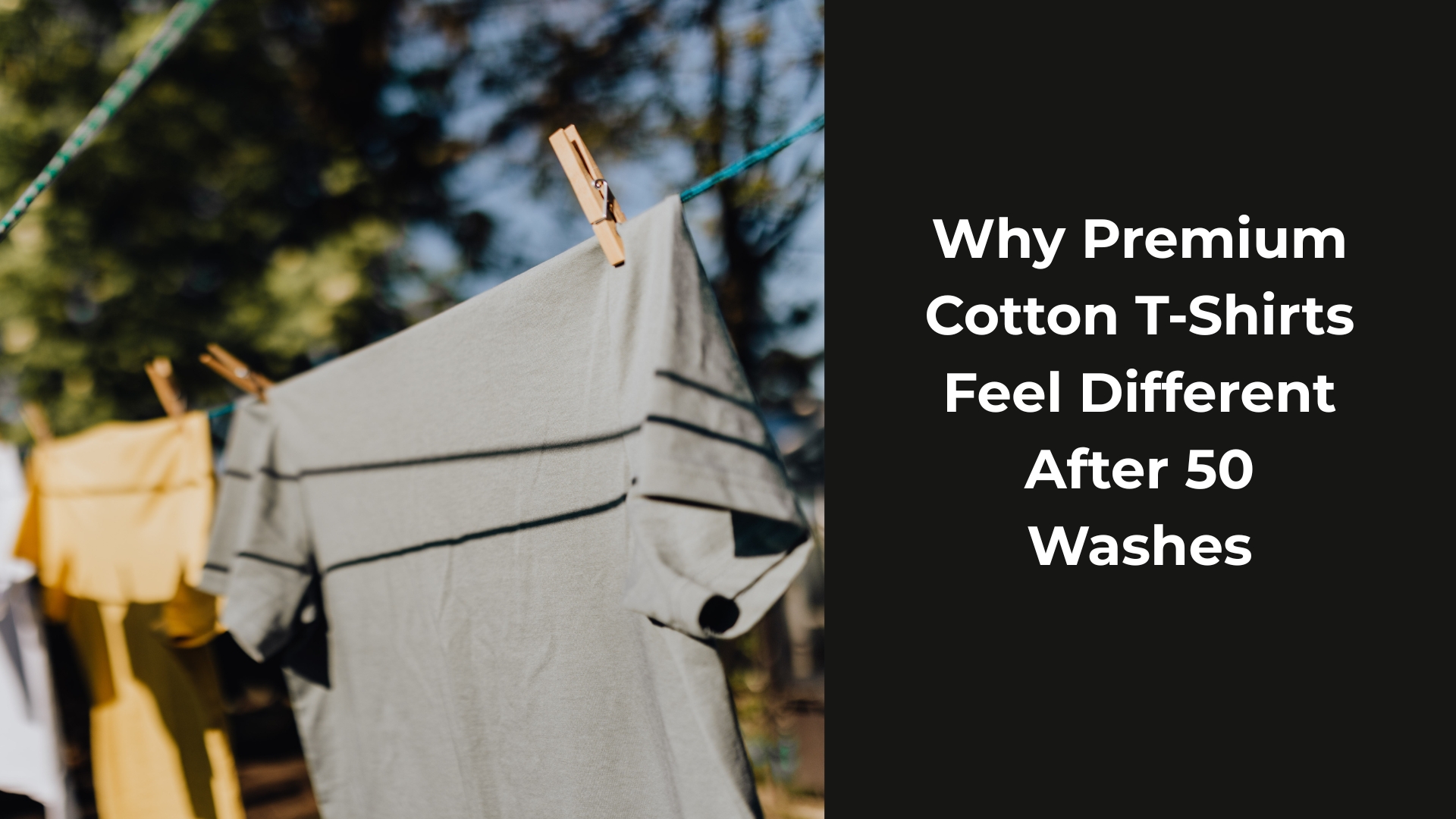
After 20, 30, or even 50 washes, you start noticing the difference: one T-shirt becomes thin, twisted and dull, while another still feels comfortable, holds its shape and looks surprisingly fresh. That difference isn’t simply about the logo on the chest. It comes down to fiber quality, fabric construction, finishing, dyeing, stitching and manufacturing consistency.
For Boer & Fitch mens wear, this is exactly why we believe clothing should be considered beyond its first impression. From sourcing fabrics to developing garments from scratch, our focus is on creating premium quality at an affordable price—clothing designed to be worn repeatedly, not replaced quickly.
What Actually Happens to a T-Shirt After 50 Washes?
Every wash exposes fabric to water, detergent, movement, temperature and drying. Over time, these factors can affect:
- Fabric strength
- Surface softness
- Shape retention
- Colour intensity
- Shrinkage
- Seam appearance
- Print durability
The American Association of Textile Chemists and Colorists (AATCC) maintains dedicated test methods for evaluating textile performance, including colorfastness to laundering, dimensional changes and appearance after home laundering. AATCC textile testing standards
So when a T-shirt still feels good after dozens of washes, it isn’t necessarily luck. Its performance is influenced by decisions made long before it reaches your wardrobe.
Premium Cotton Isn’t Just About Saying “100% Cotton”
One common misconception is that two T-shirts labelled 100% cotton should perform exactly the same.
They don’t.
Cotton quality can vary according to factors such as fibre characteristics, yarn construction, fabric weight, knitting and finishing. The final garment is the result of several manufacturing decisions—not simply the word “cotton” on a label.
The U.S. Federal Trade Commission explains that textile labels must accurately disclose fibre content, and claims such as “100% Cotton” should reflect the actual fibre composition. FTC guidance on cotton and textile labeling
This is why premium quality starts much earlier than the finished T-shirt.
The Difference Begins With Sourcing
At Boer & Fitch, sourcing isn’t simply about finding the lowest-cost fabric.
The fabric has to make sense for the garment we are trying to create.
A good cotton T-shirt should balance:
Softness + strength + comfort + construction + appearance
A fabric that feels extremely soft on day one but loses its structure quickly isn’t necessarily better. Likewise, an extremely heavy fabric isn’t automatically premium.
The goal is to find the right combination for everyday wear.
That philosophy is particularly important for our value cotton tees, where the objective is to make quality everyday clothing accessible without unnecessarily inflating the price.
Why Manufacturing “From Scratch” Matters
There is a major difference between simply purchasing finished garments and having greater control over the manufacturing process.
With own manufacturing, decisions can be made throughout the product journey—from fabric selection and cutting to stitching, finishing and quality checking.
That control creates opportunities to identify problems before a garment reaches the customer.
For example, a T-shirt’s long-term performance can be influenced by details that aren’t immediately obvious:
1. Fabric Construction
The way yarns are knitted into fabric affects how the garment behaves during repeated use and laundering.
2. Stitching Quality
Weak or inconsistent seams can cause garments to lose their shape even when the fabric itself remains strong.
3. Finishing
Finishing processes influence the garment’s hand feel, appearance and dimensional stability.
4. Printing
For printed T-shirts, the print has to complement the fabric rather than becoming the first thing to deteriorate.
AATCC even maintains separate testing methods for laundering, dimensional change and garment appearance—showing how many different aspects of a garment can be evaluated after washing. AATCC laundering and dimensional-change testing
Premium vs Cheap: The Difference Becomes Visible Over Time
Imagine buying two plain black T-shirts.
The first looks impressive when new. After repeated washing, however, the neckline becomes loose, the body twists slightly and the black starts looking tired.
The second may not appear dramatically different on day one. But after months of wear, it still fits properly and retains its original character.
That’s the hidden value of better manufacturing.
| After Repeated Washing | Lower-Quality T-Shirt | Better-Made Cotton T-Shirt |
|---|---|---|
| Shape | May distort | Better shape retention |
| Surface | Can become rough | Can retain a smoother hand feel |
| Colour | May fade faster | Better colour retention when properly dyed/cared for |
| Seams | May weaken | Better construction can improve durability |
| Fit | Can change noticeably | More consistent when fabric is properly constructed |
| Overall value | Frequent replacement | Longer useful life |
Of course, no cotton T-shirt is completely immune to wear. Washing conditions matter too. The FTC notes that care instructions are important because manufacturers should provide consumers with appropriate cleaning guidance for garments. FTC clothing care-label guidance
50 Washes Is a Better Question Than “How Does It Look Today?”
When shopping for clothing, consumers naturally judge what they can see immediately.
But a better question is:
“How will this T-shirt feel after I have worn and washed it dozens of times?”
That’s where Boer & Fitch mens wear approaches everyday fashion differently.
Our philosophy is built around own manufacturing, thoughtful sourcing and building garments from scratch, rather than treating clothing as a short-term product.
That doesn’t mean every T-shirt will look exactly the same after 50 washes. Washing temperature, detergent, drying method, sunlight and frequency all influence garment life.
But better materials and better construction can give a garment a stronger foundation.
Affordable Doesn’t Have to Mean Disposable
Premium fashion is often associated with expensive price tags.
We believe there is another way.
Our goal is to create premium, wearable and accessible clothing while maintaining sensible pricing. That includes our everyday plain tees at ₹199 and printed tees at ₹299, alongside selected clearance pieces and designs featuring elegant prints.
The idea is simple: affordable pricing should not automatically mean compromising on the fundamentals of a garment.
For us, that means building relationships with customers through trust and assurance, not just through a one-time purchase.
How to Make Your Cotton T-Shirt Last Longer
Even a premium T-shirt benefits from proper care.
For longer-lasting everyday wear:
- Follow the garment’s care label.
- Avoid unnecessarily high washing temperatures.
- Turn printed T-shirts inside out before washing.
- Avoid excessive tumble drying when the care instructions recommend otherwise.
- Don’t use more detergent than necessary.
- Avoid prolonged direct sunlight for dark or printed garments.
- Give garments enough space during washing rather than overloading the machine.
Care instructions aren’t merely a formality. Proper labeling exists specifically to help consumers clean garments in ways appropriate for their intended use. FTC Care Labeling Rule
The Real Meaning of Premium
A premium T-shirt shouldn’t only impress you when you remove it from the package.
It should become the T-shirt you automatically reach for six months later.
That is the real test.
At Boer & Fitch, we see premium quality as a combination of thoughtful sourcing, own manufacturing, careful construction and accessible pricing. Whether you’re looking for a ₹199 plain tee, a ₹299 printed T-shirt, an elegant printed design or a clearance find, the objective remains the same: create Mens fashion that earns its place in your wardrobe.
Because great clothing isn’t defined by how it looks on the first day. It’s defined by how much you still want to wear it after the fiftieth wash.
Ready to Find Your Next Everyday Tee?
Explore Boer & Fitch mens wear and discover plain tees, printed T-shirts and everyday essentials created with a focus on premium quality, comfort and affordable pricing.
Shop Boer & Fitch today—and choose the T-shirt you’ll want to keep wearing.